Sunday, May 19, 2013

May Meeting - Making Ceramic Beads for Metal Clay


The next KCPMC guild meeting is Tuesday, May 21 beginning at 7 pm. We also have a pre-meeting no-host eating out at 5pm. Feel free to join us for  some social time before the meeting! (This month we'll eat at D'Bronx, at  D'Bronx (7070 W 105th off Metcalf).

This month we begin a two-step project -

 Making Ceramic Beads Covered with Silver  

 The possibilities are endless, and clay is much cheaper than PMC!!! So coating the outside of a ceramic or bisque bead makes for larger silver beads but less investment!
 You can also add surface embellishments, paper clay punches, or textures.
 I THINK this is silver clay around a glazed ceramic bead, but don't know for sure. Hopefully, we'll find out on Tuesday night!
 Silver-coated ceramic beads with designs.


Phase 1: (May meeting) At the meeting, we will be making beads by hand from dirt clay - to be fired before the next meeting.

Phase 2: (June meeting) At the meeting, we will cover our fired clay beads with PMC paste clay. After firing, these beads will look like silver, but have a clay core.

Members will be provided with both dirt clay in May and PMC silver paste in June. (Your dues at work!!!)

To the May meeting, you should bring:
Your PMC Tool Kit
Needles, oiled toothpicks, mandrels or other things to hold the formed clay beads.
Polymer clay, foam, bead rack or other things to hold your wet clay beads.

The clay MUST be completely dry, or it will explode in the kiln, so firing must take place later next week. We will have firing information or those of us with kilns will help with the firing.


Saturday, May 18, 2013

Tools for Bead Making

Found some great ideas online to help with bead making and drying... Check out this blog by Sallie Bly.

Since I have over 50 handouts, I decided to share them with readers who would like to know more about how to work with clay. I have students who have come to my studio from as far away as Mexico and Maryland, and I also teach when I am traveling. However, not everyone can fly to the Dallas area or find the classes that they want locally.


A tutorial for making ceramic beads to cover with silver metal clay, by Sallie Bly.

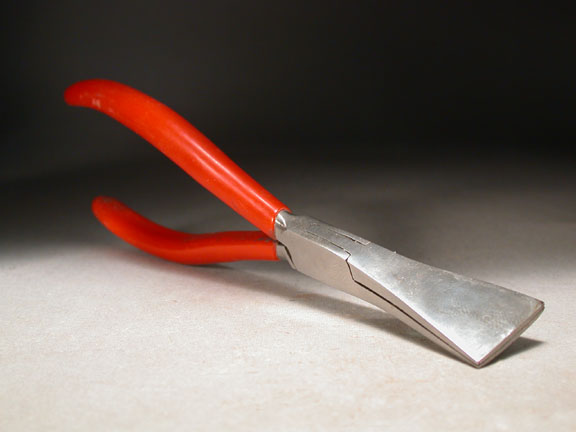
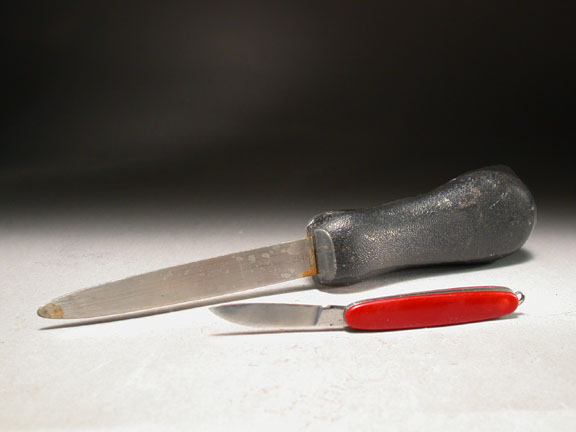
Can you guess what these are for?
 Here's a hint...
And what about those straws??


They burn out! But are not strong enough to break the bead and you don't have to remove them.

Wednesday, April 10, 2013

Get WIRED at the April Meeting

Next meeting is Tuesday, April 16, 7pm at Harder Driving School, 10362 Mastin in the Wycliff Shopping Center, Overland Park, KS 66214.

Items to Bring for a night of WIRE WORK.:
  • your jewelry pliers (round, chain and flat nosed)
  • flush cutters
  • needle files  
  • bench block (with pad if you have one)
  • small hammer
  • wire (craft or copper, various gauges from 16 - 24)
  • a few beads - some small, some large
We will cover making Basic loops, wrapped loops and various connections, do a little forging and annealing. Learn some cool tricks. like balling wire, and make-your-own closures. Start with this...


End with this!


We be making spirals and other charm-like elements. We'll try to answer questions about wire, show you how to make custom hooks, head pins, and look at what's "trending" internationally with wire weaving! Don't miss it.

If you ordered the book Metal Clay for Jewelry Makers, you may pick it up. We will do another order if needed.


Saturday, March 23, 2013

Members' Favorite Tools Sharing

In case you missed last week’s meeting where we distributed the 2013 schedule (subject to adjustments), click HERE to see it.

We shared our favorite tools (list below of those I remember..) and you should be sure you have your PMC-working tool kit ready to bring to meetings this year!

Favorite Tools - many are common, household items or easily found at a "Dollar Store" or garage sale.

My hands - the best tools we all have
My eyes
Clay shapers - Gale Schlagel ( available online or Creative Coldsnow, etc. )


Tree stump – Carol Harder The stump provides a solid base for hammering. (needs flat bottom to be sturdy)
or holding forming stakes or carving out spaces for shaping metal.
Work surfaces (meat cutting mat, 2 for $1 from the Dollar Store)
Clay thickness rolling frames


Rolling slats to control clay thickness (tape playing cards together 2, 3, 4, 5, 6 cards thick. use card numbers to show thicknesses)
Sanding sticks (3M makes great ones for metal clay but cheap nail filing blocks and sticks work great, too)


Needle tool
Ball Stylus


Exacto blades and Tissue blades

Cup warmer from a garage sale
Foam pad from packing material (for drying)

Metal dog dish from the Dollar Store (for firing pan)
Fire brick firing box, carved from a block of soft firebrick
Silhouette Cameo Cutter (Template or Paper Clay Cutting)


Scratch foam texture plates (or recycle your foam food packaging trays!)

Dental tools (ask your dentist to save his old tools for you)

Templates (or cut your own from tagboard)


Wednesday, March 13, 2013

PMC Tool Kits and Favorite Tools Show and Tell

The March 19 meeting of KC PMC Guild takes place Tuesday at Harder Driving School.

Our Tuesday topic will be
 Favorite Tool Sharing
 Everyone should bring your favorite metal clay working tool. It can be a commercial tool or a repurposed item that you discovered works really well. Be prepared to
  • explain why you like it
  • what it does
  • where to find or buy it
  • demonstrate what it does or why it's cool
  • bring some to share if you have lots of freebies
  • bring name of website or store where it's available
We will  provide the 2013 Demo Schedule and discuss plans for the year. We hope to do MORE hands-on metal clay projects and will want everyone to be able to bring a tool kit to meetings. Especially those who are new to metal clay, this will be chance to start your clay-working kit.

PMC Kit Preparation
There are lots of commercial kits available, but you don't need to spend a lot to have tools to work with metal clay. Wait till you see our easy-list.


Tuesday, February 26, 2013

Adding Resist to Brass or Copper Tubes.

Resists are materials that will "resist" the corrosive action of the acid, leaving your design as the un-etched or raised metal on your finished piece. These are the options I've tried so far.
  • White Out 
  • Paper resist
  • String or cord
  • Sharpie brand markers
  • StaZOn ink
Clean brass thoroughly before applying design - scrub with green scrubby and Barkeepers Friend or Penny Brite or other powdered cleansers to remove any oil if using rubber stamps or toner transfers. Water should sheet off, not bead up. Refrain from touching with fingers which adds body oils and interferes with adhesion of the resist.  
After-etching cleanup is important:
  • neutralize the etching acid with a baking soda and water solution
  • remove plugs and rinse again if needed
  • scrub with toothbrush, soap and water to remove all the gunk from design
  • use solvent of your choice to remove ink and adhesive (Goo Gone, Acetone) or steel wool, green scrubbie to remove marker or stamp ink.
Don't forget to protect your hands with gloves.

White Out use as a scraffito (scratching through a surface of plaster or glazing to reveal a different color underneath) resist. Paint casing with white out, let dry then scratch designs into paint with sharp tools. White out flakes easily, not very satisfactory results, IMHO.

 But the options are endless, and there may be better ways to do a scraffito method, especially if the materials is less flakey than white out. Or maybe with a better scratching tool.
 Or try
•    Gesso
•    Gel  medium
•    Nail polish

Paper resist I used standard 3x4" label stock from the office supply store.

Cut shapes with paper punches, scissors or get fancy with a Silhouette or Cricut cutter and computer designs. The design is the important thing….too detailed or tiny is very difficult, but the possibilities are good! You can also use the negative of the punch. The center bullet in the photo shows the stained label punches after etching, on the right after removal and cleaning.

String or Cord applied by winding tightly and tying. I tried both cord soaked in PVA glue and waxed linen, which worked even better! Just wind tightly and tie to prevent slipping while etching. This gives a random look to the etch.
Sharpie (or red Staedtler) brand markers Markers give lots of options, especially if you have a steady hand. Staedtler brand markers are supposed to work really well, but may be hard to find unless you order them online. Black Sharpie markers work best - other Sharpie colors  do not provide enough opacity to block the acid. Shown here, on the left marks made with a Sharpie, center after etching but before cleanup, on the right following removal of ink with Acetone.
A trick to put even stripes around the tube with a marker is to use a wood dowel with a diameter just slightly larger than the opening and 3" to 4" long. Use coarse grit sandpaper to file down the end to fit SNUGLY into the casing pushing it all the way in. Fit the other end into your drill press chuck. Spin the drill on its SLOWEST speed, and touch with marker, moving it up or down the side to put a spiral mark. Touch at intervals to add stripes.

StayzOn Ink and Rubber Stamps give great results and permit the most detailed designs. The metal must be very clean for this and remember to let the ink dry before touching. Apply ink to the rubber stamp and roll the tube one full turn. Remember the circumference of the bullet casing is only about 1.3" so over-rolling will result in a double image. Using a long bamboo skewer (or dowel) will help you roll smoothly.
 As with any other etched design, longer in the acid gives a deeper etched design. Shown,two pieces etched together, the front one has been cleaned.
These two were etched with a stamped design, then cleaned and treated with Liver of Sulfur to highlight the design.
Finish your brass with some type of protective coating such as Rennaisance Wax, PYM, Permalac, Gilders' Paste, spray varnish or your favorite finishing.

You can also experiment with other patinas, maybe you like what the metal looks like after etching before cleaning. These patinas will need to be protected with a layer of protective sealant.

To get a high polish on brass (etched or not) use Simichrome Polish, in small amounts with a soft cloth.

Saturday, February 23, 2013

Plug Those Holes

Plug holes in Brass Shell Casings Prior to Etching

(Note: This tutorial is for information on etching tube shapes, and assumes you have also read one of the many others available for basic etching information. Not all etching details are included here.)

Part1, Part2, Part3A, Part 3B, Part 3C, Update from Esprit Mystique on Jewelry Making Journal
Another excellent  tutorial found on Pinterest: Debra Read Etching Tutorial
Cool  bullet jewelry for sale here. The Smoking Bullet
Other online tutorials are out there.

Materials:
  • Bamboo skewers
  • Toothpicks
  • Dense foam, sliced to 3/8” thick
  • Wood dowel the diameter of shell openings, or slightly larger 
Depending on your choice of etching you will want to plug the holes in the casing - to prevent the etchant from eating away at the inside of the brass tube. When etching flat metal (there are many tutorials online for this, including this one from DeborahRead.com) you can easily cover the back side with packing tape. But tubes or bullets must be plugged.

Toothpicks work if the hole from removing the blasting cap isn't too big, but I've found that a piece of bamboo cooking skewer works better. (You only need a short piece, so cut it off, then resharpen a point in an electric pencil sharpener and you are ready to plug another one.)

The other end has a larger opening, which may be plugged with a piece of wood dowel that fits snugly, or try cutting plugs from dense foam. (I save the foam blocks from having my carpets cleaned, then slice them into 3/8" pieces with a serrated knife. Cut like a cookie -  do this BEFORE applying ink or Sharpie resists, or you risk rubbing off your art.)
The hole must be snugly filled or acid will seep inside. This one is NOT plugged properly.
It's better if the plug foam fills and overlaps the edges a bit.
After etching and neutralizing, the foam will be stained but should be intact. Be cautious when removing the plug, in case acid has seeped inside. If it has, rinse again in baking soda and water rinse until bubbling ceases, then re-rinse in water.

Sometimes these foam plugs are sturdy enough to reuse. Experiment with other types of styrofoam - the denser the better. The foam does help keep the bullets from resting completely on the bottom of the acid, which will hinder uniform etching all around. Some type of constant vibration (whether from sitting on top of your running dryer or from a small fish tank bubbler) will help keep the precipitates from collecting on the tube.

If you cut a foam plug that is too small, it can easily slide up into the casing. Now you need those narrower toothpicks - they can poke through from the end and help remove the foam.
Now, you are ready to decorate your casings by Adding Resist to Brass or Copper Tubes.